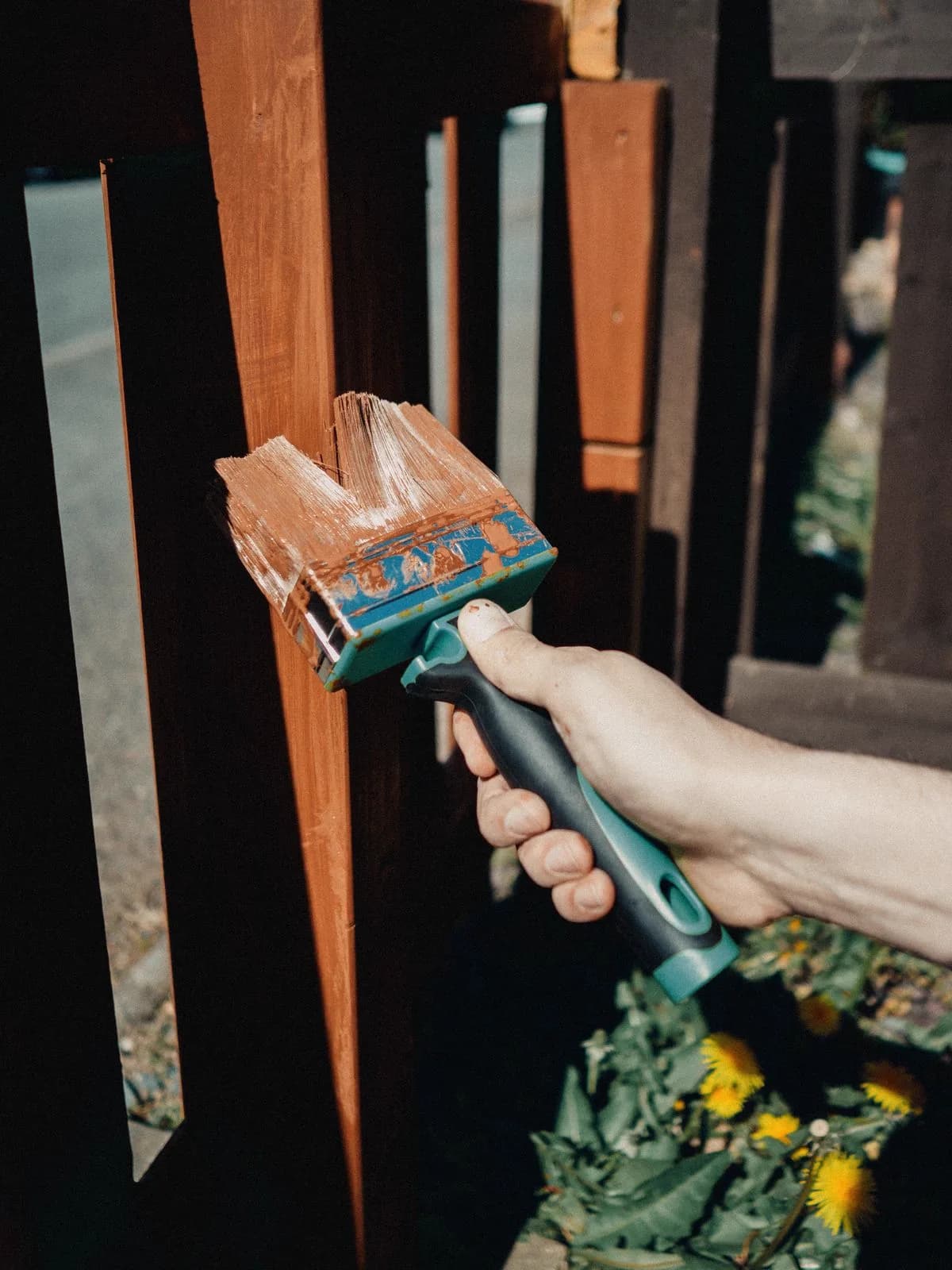
Why stain is protection, not decoration
Both our installation and repair customers hear the same advice: if you own a wood fence in North Texas, staining is the difference between replacing it early and getting its full life. Texas UV breaks down bare wood surface fast — the gray you see on older fences is sun-destroyed wood fiber, not patina. Meanwhile storms drive water into end grain and fastener holes, feeding rot and working boards loose.
A quality penetrating stain blocks the UV with pigment and sheds water with sealers. It also keeps the fence looking like it belongs to someone — which, around property values, is not nothing.
Timing: new fences and old
New fences shouldn't be stained the week they're built. Fresh lumber — especially pressure-treated pine — carries too much moisture; stain applied over it can't penetrate and won't last. The wood needs to dry to a reasonable moisture content first, which in Texas weather usually means a matter of weeks to a few months depending on season and lumber. We check rather than guess.
Existing fences are best stained before the wood turns fully gray. Catch it in time and prep is a clean-and-stain job; wait, and the gray layer has to be washed or brightened off first for the stain to bond to sound wood. Either is doable — one just costs more and starts from further behind.
What a proper stain job involves
Preparation decides the result: cleaning off dirt, mildew, and weathered fiber; letting the fence dry; protecting the lawn, brick, and pool deck; then applying stain generously enough to penetrate — back-brushing where the wood drinks it in. Semi-transparent stains show grain and look the most natural; solid stains carry more pigment, hide more age, and act more like paint. We'll show you both on your actual fence boards before you choose.
Expect a maintenance recoat cycle every few years — Texas sun sets the schedule, and south- and west-facing runs weather fastest.
Honest limits
Stain protects sound wood; it doesn't resurrect failed wood. If pickets are brittle, posts are rotting at the ground line, or rails are sagging, staining first is money in the wrong order — repair comes before protection. We'll walk the fence with you and sequence it honestly, even when the honest answer is “stain next year, fix posts now.” The goal is the longest life for the fence, not the quickest invoice. More on lifespan math in how long a wood fence lasts in Texas.